
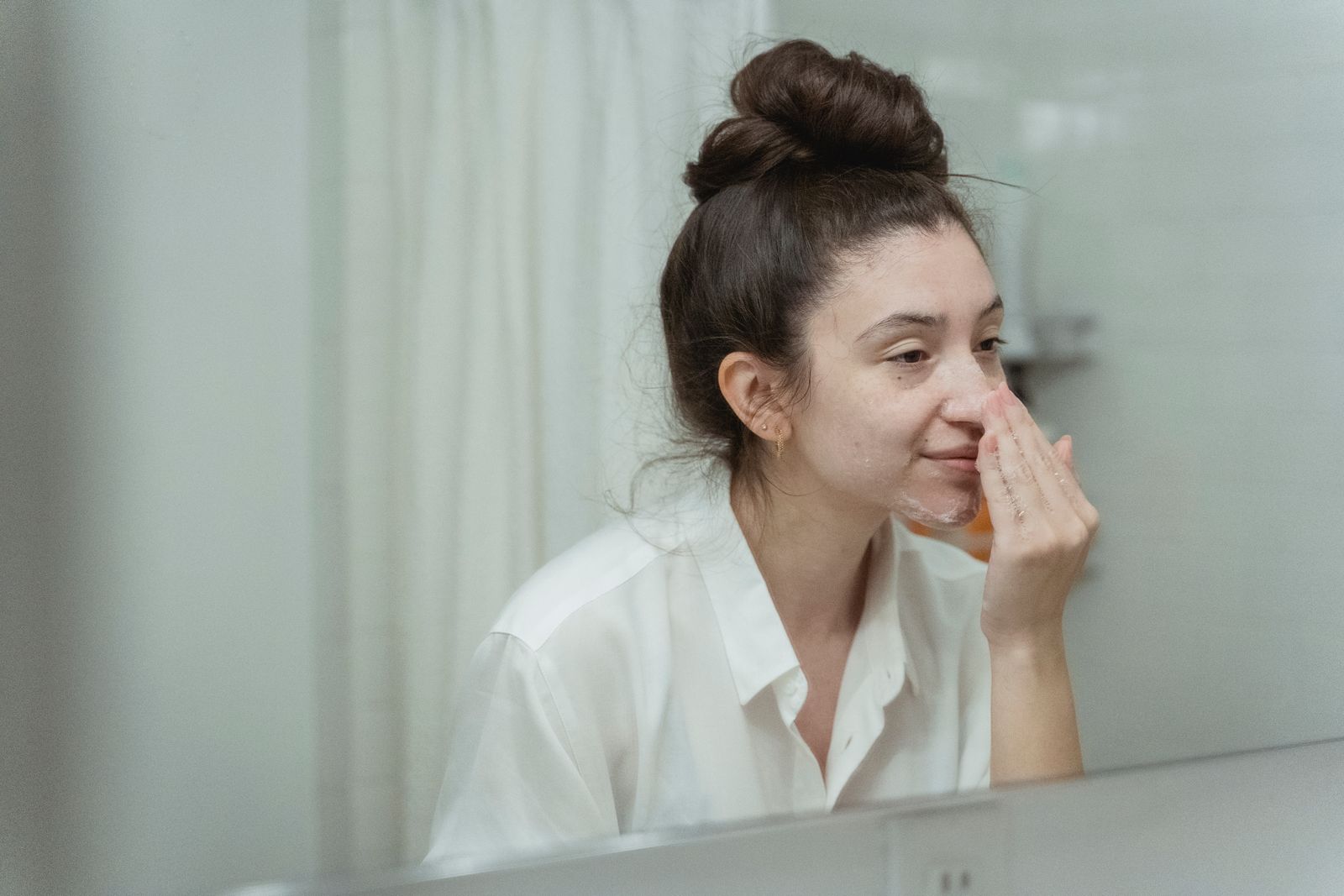
Why Skin Can Look Worse After Starting Copper Peptides
Why might skin look worse after starting copper peptides, and what distinguishes irritation from anecdotal claims of a predictable phase? Do not assume a universal weeks-3-to-5 reaction.
Reviewed by Taylor Anderson, RN
Aesthetic Registered Nurse
Taylor Anderson is an aesthetic registered nurse and a reviewer for Get Hot or Die.
Updated September 6, 2026
Quick answer
Worse-looking skin after starting copper peptides is most often irritation or sensitivity to the formula. Researchers have not measured whether collagen remodeling activity in cell studies creates a predictable worsening period on human skin.
In this guide
Key takeaways
- Redness, itching, dryness, flaking and small acne-like bumps in the first days often fit contact dermatitis, which can resemble acne.
- Dermatologists reserve purge for products that speed surface turnover like retinoids, AHAs, BHAs and certain enzymes, a group that does not include peptides.
- Pause the product and wash gently with cool water if you feel burning, see a scaly or itchy rash, hives or swelling, or breakouts that spread; fading within days after stopping points to the formula.
If your skin looks worse after starting a copper peptide, irritation or sensitivity to the formula explains it most often. You may see redness, itching, dryness or new clogged pores. Dermatologists link purging to retinoids and exfoliating acids, and no study has shown a predictable copper peptide phase.
Why can skin look worse at first?
Your skin can turn red, itch, or feel dry and flaky in the first days with a new product. Those changes can include small bumps that look like acne. Dryness, flaking and peeling from contact dermatitis, a red and irritated reaction to something touching your skin, can resemble acne, and no studies have tested skin purging.
A clinic summary of 12 clinical studies described brief redness and mild itching with topical GHK-Cu. That pattern fits irritation that calms after you stop the product.
Online talk sometimes points to lab work to explain a rough start. A review of cell studies described GHK influencing both buildup and breakdown of collagen and related support material. Researchers have not measured whether that cell activity creates a predictable worsening period on human skin.
How is irritation different from a claimed purge?
Dermatologists use purge in a narrow way. One dermatologist said breakouts after a new product occur mainly with topical retinoids, with exfoliating acids less common, in dermatologists interviewed about purging. A dermatology school review on turnover and purging draws the same boundary. Only products that speed surface turnover, such as retinoids, AHAs, BHAs and certain enzymes, fit that pattern. Peptides fall outside that group, so a breakout after a peptide product points to a reaction to the product.
The way your skin feels and looks helps you sort it. Irritant or allergic contact dermatitis often looks red and scaly and feels itchy or burning. A product-caused acne eruption looks different, with a sudden spread of dozens of clogged pores that look alike.
What should you do if it happens?
Pause the product if you feel burning, see a scaly or itchy rash, notice hives or swelling, or see breakouts that spread or worsen over days. Wash a cream off gently with cool water and leave the area alone while your skin calms. Researchers take copper or peptide allergy seriously enough that a Phase 2 wound gel trial design excludes volunteers with that allergy and follows safety events through week 12.
Stay off a product that burns or spreads a rash, even if someone calls it a phase. If redness and itching fade within a few days of stopping, the formula likely did not suit your skin. To see whether a copper peptide fits your skin goals and routine, take the HOD quiz.
Ready to make a move?
Answer three questions to see the options, prices, and providers that fit your goals.
See My PlanFAQ
What does irritation from a copper peptide formula look like?
It often includes redness, itching, dryness, flaking and small bumps that look like acne. Contact dermatitis can resemble acne, and a clinic summary described brief redness and mild itching with topical GHK-Cu.
Do copper peptides cause a predictable purge phase?
Dermatologists link that term to retinoids and exfoliating acids that speed surface turnover. Cell studies show GHK influences buildup and breakdown of collagen and support material, but researchers have not measured whether that activity creates a predictable worsening period on human skin.
How is irritation different from a claimed purge?
Irritant or allergic contact dermatitis often looks red and scaly and feels itchy or burning. A product-caused acne eruption looks like a sudden spread of dozens of similar clogged pores. Peptides fall outside the turnover-speeding group, so a breakout after a peptide product points to a reaction to the product.
What should I do if my skin looks worse after starting?
Pause use if you feel burning, see a scaly or itchy rash, notice hives or swelling, or see breakouts that spread or worsen over days. Wash cream off gently with cool water and leave the area alone. If redness and itching fade within a few days of stopping, the formula likely did not suit your skin.
Keep reading
Sources (18)
- Skin purging: Pictures, causes, and treatments · medicalnewstoday.com · captured September 6, 2026
- GHK-Cu Peptide | The benefits, side effects, and more [2026] · innerbody.com · captured September 6, 2026
- Copper Peptides Side Effects: What The Research Shows - SeekPeptides · seekpeptides.com · captured September 6, 2026
- Copper Peptides Ruined My Skin: Why | PeptidesExplorer · peptidesexplorer.com · captured September 6, 2026
- “Skin Purging” Is Misleading—This Is What Dermatologists Say Is Really Happening | MONTECRISTO · montecristomagazine.com · captured September 6, 2026
- Copper Peptides in Regenerative Aesthetic Dermatology · onlinelibrary.wiley.com · captured September 6, 2026
- Skin Purging: Which Products Cause It · schoolofdermatology.com · captured September 6, 2026
- Skin Purging – Protocol Skincare · protocol-lab.com · captured September 6, 2026
- What Is Skin Purging & What Causes It? · versedskin.com · captured September 6, 2026
- GHK-Cu Side Effects: What the Research Actually Documents · dosagepeptide.com · captured September 6, 2026
- Copper Peptide & GHK-Cu Side Effects | HealthyDerm · healthyderm.com · captured September 6, 2026
- Regenerative and Protective Actions of the GHK-Cu Peptide in the Light of the New Gene Data. · pubmed.ncbi.nlm.nih.gov · captured September 6, 2026
- Topical GHK-Cu Gel for Acute Skin Wound Healing · clinicaltrials.gov · captured September 6, 2026
- Human skin penetration of a copper tripeptide in vitro as a function of skin layer. · pubmed.ncbi.nlm.nih.gov · captured September 6, 2026
- GHK Peptide as a Natural Modulator of Multiple Cellular Pathways in Skin Regeneration. · pubmed.ncbi.nlm.nih.gov · captured September 6, 2026
- GHK-Cu Copper Peptide 2026 Review Nationwide Peptides https://www.nationwidepeptides.com › peptide › ghk-c... · nationwidepeptides.com · captured September 6, 2026
- What are the potential side effects and adverse reactions of topical copper peptide? · droracle.ai · captured September 6, 2026
- GHK-Cu for Anti-Aging: Does This Copper Peptide Really ... Midi Health https://www.joinmidi.com › post › ghk-cu · joinmidi.com · captured September 6, 2026