
Estrogen Gel vs Patch: Application, Skin Tolerance, and Routine
estrogen gel vs patch? Compare application, skin tolerance and practical adherence using product labeling; no invented dose conversion.
Reviewed by Taylor Anderson, RN
Aesthetic Registered Nurse
Taylor Anderson is an aesthetic registered nurse and a reviewer for Get Hot or Die.
Updated September 8, 2026
Quick answer
Gel had fewer adhesive-related skin reactions, while patch avoids daily drying and shower timing. These comparisons cover the studied products and climates and do not provide a gel-to-patch dose conversion.
In this guide
Key takeaways
- Gel needs priming once, then a thin daily layer from wrist to shoulder with drying time and a pause before washing that arm.
- Patch needs clean, dry, intact skin, continuous wear with scheduled changes and site rotation.
- Hot, humid study settings showed better acceptance of gel alongside fewer local reactions, so factor climate and sweating into comfort.
If adhesive bothers your skin, gel is often the easier fit. If you forget daily steps, patch is often the easier habit. Research comparing the two found fewer skin reactions with gel, mainly itching and rash where the patch adhesive sat, while daily gel asks more of your morning timing around drying and showering.
How do you use gel vs patch?
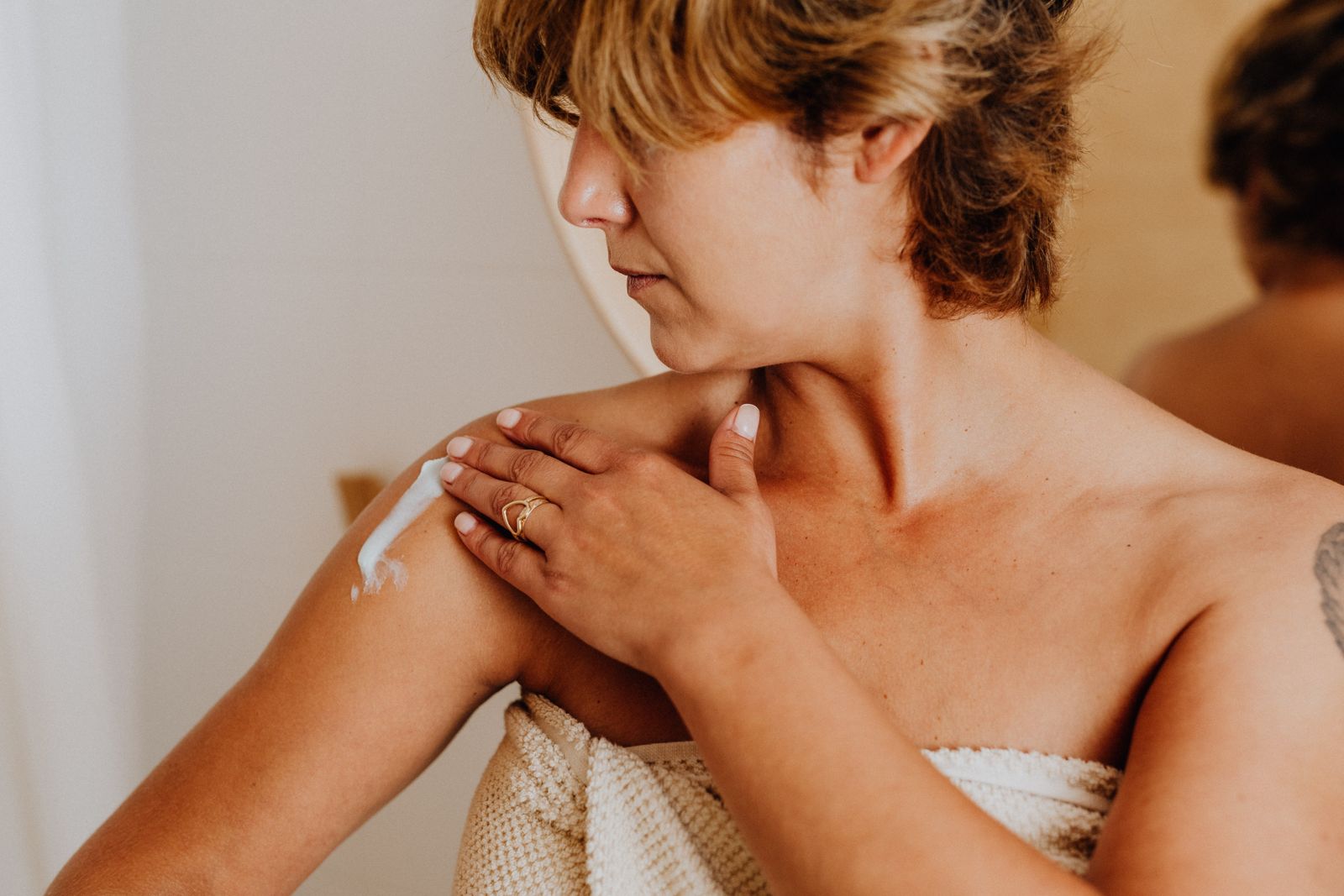
With gel, you prime the pump with 5 presses before first use, then you spread a thin layer over the inside and outside of one arm from wrist to shoulder once daily (EstroGel directions). You let the gel dry before you dress, and you wait to wash that arm because washing one hour after application lowered the average estrogen level over 24 hours by 22% in label testing (FDA EstroGel label).
With patch, you stick it on clean, dry, intact skin and leave it in place while it releases estrogen (estradiol) continuously (Climara label). You change it on schedule and rotate sites to give your skin a break. Your clinician sets the amount separately for gel or patch, so one does not convert to the other by math.
Which is easier on skin?
In a 12-week randomized comparison in 361 postmenopausal women, gel reduced hot flush frequency with a lower frequency of skin reactions than patch (Medscape report on NAMS presentation). The reactions were local skin responses where treatment touched skin.
A comparison in Thai postmenopausal women found no skin side effects with once-daily gel, while 58% of patch users developed itching, blistery rash or lingering dark marks where adhesive sat (Thai skin tolerance study). A Brazilian study in a hot, humid climate also found fewer local skin reactions with gel than patch (Brazilian tropical comparison). These results describe the products and climates studied, not a promise for every woman, and heat and sweat can add to irritation.
Which routine is easier to stick with?
Gel asks you to remember a daily step, let your arm dry, and plan showers around that one-hour window. Patch asks less often but asks your skin to live with adhesive for days, plus attention to edges lifting, hair, lotion and tight clothing.
In the tropical climate comparison, women accepted gel more readily, which fits the skin findings (Brazilian tropical comparison). Think about your own pattern. If daily habits feel easy and adhesive has bothered you before, gel may fit better. If daily steps slip and your skin usually tolerates adhesive bandages, patch wear may fit better. You can review symptoms and preferences with a clinician and start your HOD plan through the HOD quiz.
Ready to make a move?
Answer three questions to see the options, prices, and providers that fit your goals.
See My PlanFAQ
How do you apply estrogen gel?
Prime the pump with 5 presses before first use, spread a thin layer over the inside and outside of one arm from wrist to shoulder once daily, let it dry before dressing and avoid washing that arm for an hour. Label testing showed washing at one hour lowered the average level over 24 hours by 22 percent.
How do you use an estrogen patch?
Place it on clean, dry, intact skin and leave it in place to release estradiol continuously. Change it on schedule and rotate sites to give skin a break, with attention to edges lifting, hair, lotion and tight clothing.
Which causes fewer skin reactions, gel or patch?
Comparisons found fewer local skin reactions with gel than with patch. Patch reactions were itching, blistery rash and lingering dark marks where the adhesive sat, and heat and sweat can add to irritation.
Can you convert a gel dose to a patch dose?
No. The amount for gel and the amount for patch are set separately by your clinician, so one does not convert to the other by math.
Sources (9)
- Comparison of the transdermal delivery of estradiol from two gel formulations - ScienceDirect · sciencedirect.com · captured September 8, 2026
- HRT Patch vs. Gel: Which Absorbs Better? · healthcentral.com · captured September 8, 2026
- Comparison of gel and patch estradiol replacement in Brazil, a tropical country - Maturitas · maturitas.org · captured September 8, 2026
- Estradiol Gel Relieves Hot Flushes With Less Skin Irritation Than Patch · medscape.com · captured September 8, 2026
- Estradiol Dosage Guide + Max Dose, Adjustments - Drugs.com · drugs.com · captured September 8, 2026
- Estradiol Gel: Package Insert / Prescribing Info / MOA · drugs.com · captured September 8, 2026
- Comparative absorption and variability in absorption of estradiol from a transdermal gel and a novel matrix-type transdermal patch - ScienceDirect · sciencedirect.com · captured September 8, 2026
- Label: CLIMARA- estradiol patch - DailyMed · dailymed.nlm.nih.gov · captured September 8, 2026
- Adverse skin reactions to transdermal oestradiol in tropical climate. A comparative study of skin tolerance after using oestradiol patch and gel in Thai postmenopausal women - ScienceDirect · sciencedirect.com · captured September 8, 2026