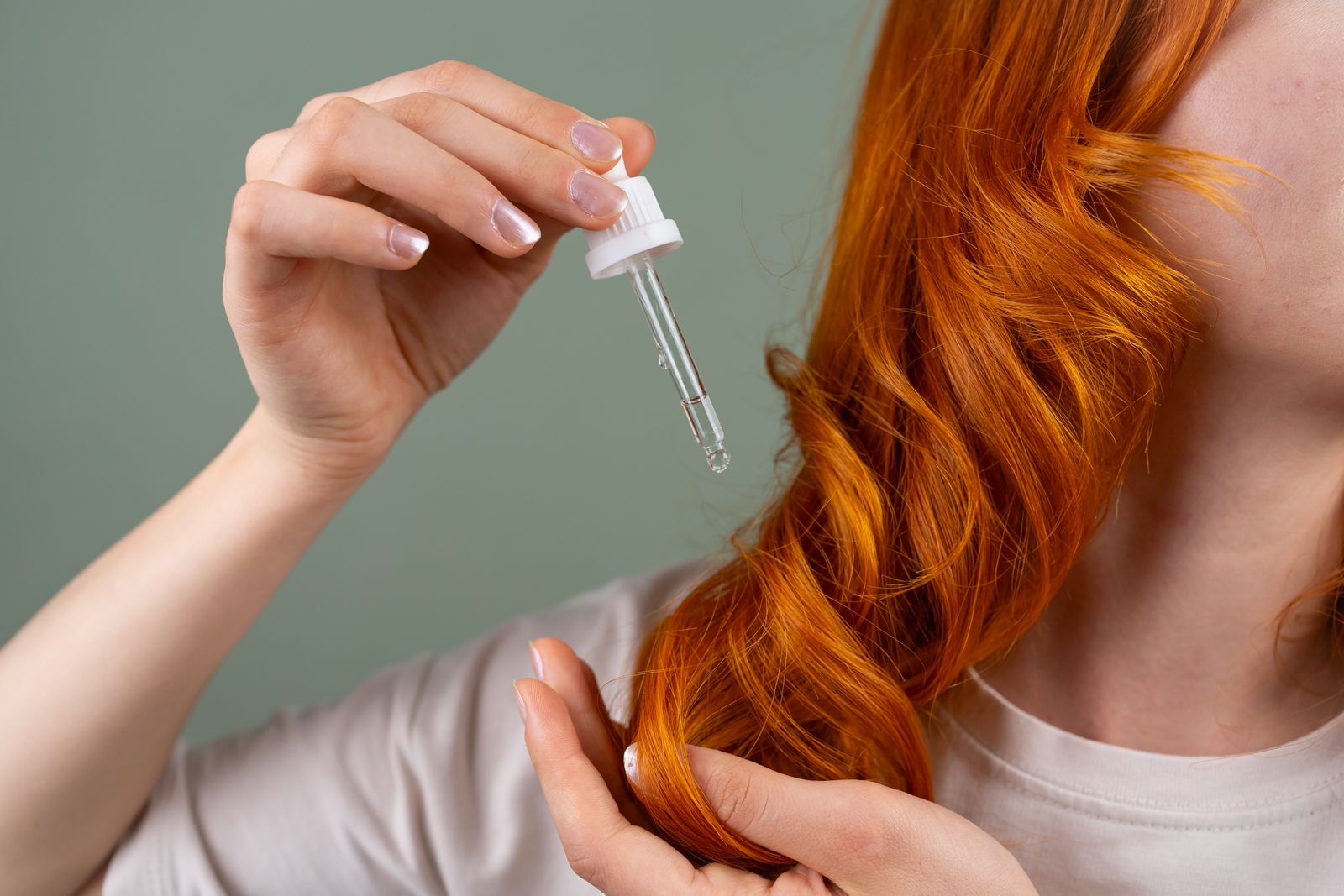
Can Women Use GHK-Cu and Minoxidil Together?
Can women use GHK-Cu and minoxidil together?
Quick answer
Yes. Women can discuss using topical GHK-Cu and minoxidil in the same hair-loss plan with a clinician. Minoxidil has far stronger human evidence, while GHK-Cu has smaller and older studies. No large trial has shown that adding GHK-Cu consistently improves results beyond minoxidil alone, and layering scalp actives can increase irritation.
Reviewed by Taylor Anderson, RN · Aesthetic Registered Nurse · Updated September 3, 2026
Key takeaways
- Topical GHK-Cu and minoxidil may be used in the same plan with clinician guidance, but they should not be assumed to work better when combined.
- Minoxidil has decades of human research for female pattern hair loss; GHK-Cu is supported mainly by small, older, mechanistic, or mixed-sex studies.
- A 1993 small study in men reported GHK-Cu density gains comparable to 5% minoxidil over six months, but it does not establish equal effectiveness for women.
- A controlled study of 38 people with androgenetic alopecia reported a 14.5% mean density increase and a 12.6% follicle-diameter increase over 24 weeks, but the result needs independent replication and does not test the combination.
- Using multiple scalp actives can increase redness, itching, flaking, or contact dermatitis, so product labels and clinician instructions matter.
Yes. Women can discuss using topical GHK-Cu and minoxidil in the same hair-loss plan with a clinician. Minoxidil has decades of human evidence for female pattern hair loss. GHK-Cu has a plausible biological rationale involving follicle signaling and vascular support, but its human data come from smaller and older studies.
No large trial has shown that the specific combination consistently works better than minoxidil alone. Using two scalp actives can also increase irritation, so the right choice depends on the cause of thinning, the formulations involved, and how your scalp responds.
Get Hot or Die currently has licensed providers who prescribe and dispense medication. The Get Hot or Die personalized quiz can help organize your goals, budget, and medical history before that discussion.
Can women use GHK-Cu and minoxidil together?
Topical GHK-Cu and topical minoxidil may be considered together with clinician guidance. Bolt Pharmacy, in guidance published July 14, 2026, and TelosRX, in an August 30, 2026 review, report no established interaction between the two topical ingredients. That does not prove that combining them adds a reliable hair-growth benefit.
| Question | Answer |
|---|---|
| Can they be used in the same plan? | Topical GHK-Cu and topical minoxidil may be considered together with clinician guidance. |
| Which has stronger evidence? | Minoxidil has a much deeper human evidence base. GHK-Cu is supported by smaller, older, and mechanistic studies. |
| What is the main practical concern? | Multiple scalp actives can increase the risk of irritation or contact dermatitis. |
Minoxidil is FDA-approved for androgenetic alopecia in women. GHK-Cu is not FDA-approved for hair loss and is used in compounded topical preparations prescribed by licensed providers. The regulatory status does not answer whether the combination is right for you, so the cause of thinning still needs attention.
How GHK-Cu and minoxidil may support hair growth
The two ingredients have different proposed effects on follicle biology. Minoxidil is associated with vasodilation and changes in the hair-growth cycle. GHK-Cu has been studied for effects on follicle signaling, the anagen growth phase, vascular support, and inflammatory pathways.
| Treatment | Proposed role | What the evidence supports |
|---|---|---|
| GHK-Cu | May influence follicle signaling, growth-phase activity, vascular support, and inflammatory balance. | Preclinical research, mechanistic findings, and small clinical signals. |
| Minoxidil | May support follicles through vasodilation and effects on the hair-growth cycle. | Decades of human research and a substantially stronger clinical base. |
| Together | The different proposed effects make a combined approach biologically plausible. | The rationale is stronger than the controlled clinical evidence for the combination. |
MDhair’s June 3, 2026 review discusses GHK-Cu’s proposed relationship with follicle stem cells, the Wnt/β-catenin pathway, and growth factors such as VEGF and IGF-1. TelosRX describes these proposed mechanisms as distinct from minoxidil’s primary vasodilation effect. Those mechanisms explain why people are interested in combining the ingredients. They do not establish the size of any added benefit.
If you are comparing GHK-Cu with other copper-peptide products or trying to work out where it fits, read Copper Peptides and Vitamin C and the GHK-Cu hair hub.
What the evidence says for women
Most GHK-Cu hair data come from small studies, older research, or groups made up mainly of men. That matters because female pattern hair loss can have different contributors, including hormonal changes, inflammation, and shifts in follicle cycling.
| Evidence | Finding | What it means for women |
|---|---|---|
| Small double-blind comparison | A 1993 study summarized by GetHealthspan reported that topical GHK-Cu produced hair-density improvement comparable to 5% minoxidil after six months in men with androgenetic alopecia. | It is a useful signal, not female-specific proof. |
| Small controlled topical study | Medsbase reports a study of 38 people with androgenetic alopecia over 24 weeks. Mean density increased 14.5%, and follicle diameter increased 12.6% in the treatment group versus 3.2% in vehicle. | The result is promising, but the study needs fuller reporting and independent replication. |
| Combination reports | Some reports combine GHK-Cu with minoxidil and sometimes dutasteride or platelet-rich plasma without a control group. | The design cannot show how much benefit GHK-Cu added. |
The available reviews do not identify a large randomized trial dedicated to the GHK-Cu and minoxidil combination in women. The existing numbers may justify a clinician conversation, but they cannot support the claim that GHK-Cu matches minoxidil or improves every woman’s results.
How to use topical GHK-Cu and minoxidil in the same plan
There is no standardized schedule for using both products. Keep the discussion focused on topical GHK-Cu and topical minoxidil, and follow the label or prescriber instructions for each product.
| Check | What to do | Why it matters |
|---|---|---|
| Confirm the form | Make sure you are discussing topical products. Systemic copper exposure requires separate medical review. | Most of the cited hair research concerns topical use. |
| Check the ingredient | Look for GHK-Cu or the INCI name Copper Tripeptide-1 on the peptide product label. | These are the ingredient names identified in the product guidance reviewed here. |
| Follow directions | Use each product according to its label or prescriber instructions. Do not assume they should be mixed or applied at the same time. | No combined schedule has been established in the cited evidence. |
| Give it time | Assess progress over a consistent hair-growth window rather than changing products every few days. | Visible changes are commonly assessed around three to six months, and minoxidil can cause initial shedding. |
Applying one product in the morning and the other at night may reduce direct overlap, but this approach has not been validated in a controlled trial. Ask a clinician or pharmacist whether spacing makes sense for your specific formulations. Consistent photos taken in similar lighting are more useful than daily mirror checks.
Side effects and when to seek medical guidance
Scalp irritation is the most practical concern when you layer actives. Watch for redness, itching, flaking, burning, or a rash that worsens rather than settles.
| Concern | What to watch for | What to do |
|---|---|---|
| Scalp irritation | New or worsening irritation, including possible contact dermatitis. | Ask a clinician or pharmacist how to adjust the products instead of continuing through worsening symptoms. |
| Minoxidil effects | Scalp irritation, unwanted facial or body hair, initial shedding, and rare cardiovascular effects associated with systemic absorption. | Follow product directions and seek medical guidance for concerning symptoms. |
| Copper exposure | Copper overload is theoretically possible with high-dose systemic use. | People with Wilson disease should avoid copper peptides and discuss alternatives with a clinician. |
| Unclear cause of thinning | Hair loss may involve more than one factor, including hormonal changes, inflammation, or disrupted follicle cycling. | Get individualized guidance instead of assuming the combination addresses the cause. |
Get Hot or Die reviews the history behind your hair concerns as part of its current prescribing and dispensing care. That matters when thinning could have more than one cause or when a scalp reacts badly to layered products.
The bottom line
Women may be able to use topical GHK-Cu and minoxidil together, but the pairing is biologically plausible rather than proven superior. Minoxidil has the stronger human evidence. GHK-Cu may be worth discussing as an adjunct, especially when a clinician has reviewed the cause of thinning and the risk of irritation, but current studies do not establish a standard combination or schedule.
Frequently asked questions
Can women use GHK-Cu and minoxidil together?
Yes. Topical GHK-Cu and minoxidil may be considered in the same plan with clinician guidance, but the combination has limited direct evidence and may increase scalp irritation.
Is GHK-Cu as effective as minoxidil?
It cannot be considered equally proven. A small study in men reported density improvement comparable to 5% minoxidil, but GHK-Cu lacks minoxidil’s depth of human hair research.
Can GHK-Cu replace minoxidil?
There is not enough evidence to treat GHK-Cu as a proven replacement. Discuss it as a possible adjunct or alternative with a clinician.
How should I apply GHK-Cu and minoxidil together?
No standardized combined schedule is established. Use each product according to its label or prescriber instructions, and do not assume they should be mixed or applied at the same time.
What side effects should women watch for?
Watch for scalp irritation or contact dermatitis, minoxidil-related initial shedding or unwanted hair growth, and concerning symptoms. People with Wilson disease should avoid copper peptides.
Can Get Hot or Die help me choose a hair-loss plan?
Yes. Get Hot or Die currently has licensed providers who prescribe and dispense medication after reviewing your history and goals.
Sources
- MDhair, “Copper peptides vs. minoxidil: which actually grows hair?”, published June 3, 2026.
- GetHealthspan, “GHK-Cu for Hair Growth: What the Evidence Actually Shows”, published June 1, 2026.
- TelosRX, “GHK-Cu for Hair Growth: Research, Evidence & How It Works”, published August 30, 2026.
- Bolt Pharmacy, “Copper Peptides for Hair Loss: Evidence, Safety, and How to Use Them”, published July 14, 2026.
- Medsbase, “GHK-Cu for Hair Loss: What the Research Shows”, published May 12, 2026.
- Get Hot or Die, care and prescribing details checked September 3, 2026.
Ready to make a move?
Answer three questions to see the options, prices, and providers that fit your goals.
See My PlanQuestions women actually ask
Can women use GHK-Cu and minoxidil together?
Yes. Topical GHK-Cu and minoxidil may be considered in the same plan with clinician guidance, but the combination has limited direct evidence and may increase scalp irritation.
Is GHK-Cu as effective as minoxidil?
It cannot be considered equally proven. A small study in men reported density improvement comparable to 5% minoxidil, but GHK-Cu lacks minoxidil’s depth of human hair research.
Can GHK-Cu replace minoxidil?
There is not enough evidence to treat GHK-Cu as a proven replacement. Discuss it as a possible adjunct or alternative with a clinician.
How should I apply GHK-Cu and minoxidil together?
No standardized combined schedule is established. Use each product according to its label or prescriber instructions, and do not assume they should be mixed or applied at the same time.
What side effects should women watch for?
Watch for scalp irritation or contact dermatitis, minoxidil-related initial shedding or unwanted hair growth, and concerning symptoms. People with Wilson disease should avoid copper peptides.
Can Get Hot or Die help me choose a hair-loss plan?
Yes. Get Hot or Die currently has licensed providers who prescribe and dispense medication after reviewing your history and goals.
Sources (10)
- Copper peptides vs. minoxidil: which actually grows hair? | MDhair · mdhair.co · captured September 3, 2026
- GHK-Cu for Hair Growth: What the Evidence Actually Shows · gethealthspan.com · captured September 3, 2026
- GHK-Cu for Hair Growth: Research, Evidence & How It Works | telos rx · telosrx.com · captured September 3, 2026
- Copper Peptide Hair Research | GHK-Cu & AHK-Cu Studies – Hairgenetix · hairgenetix.com · captured September 3, 2026
- Copper Peptides for Hair Growth · anagen.xyz · captured September 3, 2026
- GHK-Cu for Hair Loss: What the Research Shows · medsbase.com · captured September 3, 2026
- Copper Peptide GHK-Cu for Hair Growth: Anagen Extension, VEGF Mechanism, and Evidence | PeptideRadar · peptideradar.net · captured September 3, 2026
- Copper Peptides for Hair: GHK-Cu Hair Growth, Loss & Regrowth Research · theghkcupeptide.com · captured September 3, 2026
- GHK-Cu (Copper Peptide): Mechanism of Action, Research Overview & Reconstitution Guide | The Peptide Encyclopedia · thepeptideencyclopedia.com · captured September 3, 2026
- Copper Peptides for Hair Loss: Evidence, Safety, and How to Use Them – Bolt Pharmacy · boltpharmacy.co.uk · captured September 3, 2026