Skin
How to Layer GHK-Cu and Tretinoin for Better Skin After 35
GHK-Cu and tretinoin work together if you separate them correctly. The layering order, timing, and results women actually see after 12 weeks.
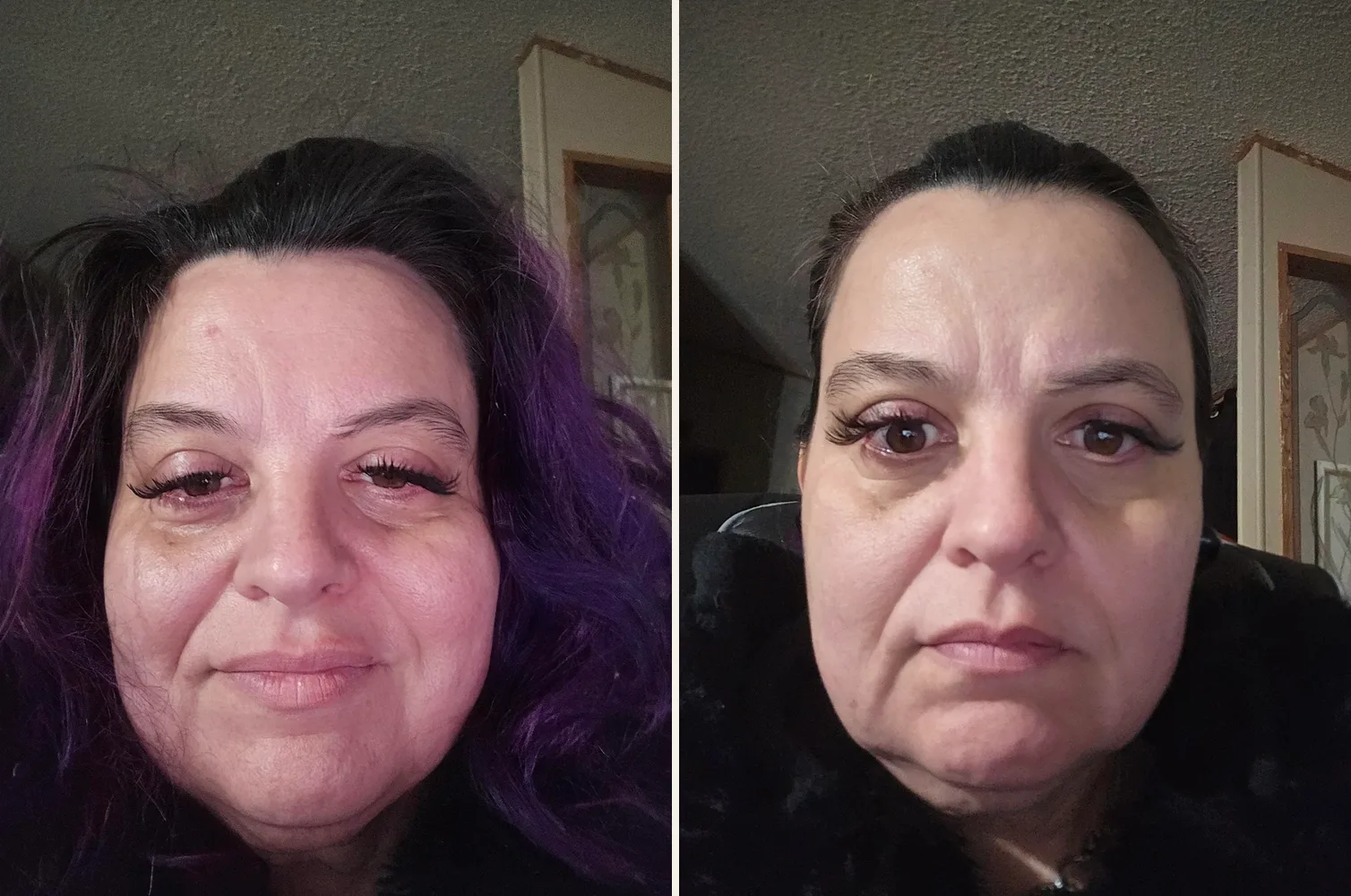
Your skin stopped bouncing back sometime around 33, and no amount of "hydrating" serums is fixing the texture shift, the creeping laxity, the fine lines that showed up and clearly plan to stay. This article gives you the exact protocol for combining two of the most effective anti-aging compounds that exist, GHK-Cu and tretinoin, in the right order, at the right time, so they actually work instead of canceling each other out.
Here's the short version: GHK-Cu and tretinoin belong in the same routine, but never on your face at the same time. GHK-Cu needs a neutral pH (around 5.5 to 6.5) to stay active, while tretinoin is formulated in acidic conditions. Layer them simultaneously and you degrade the peptide, waste your money, and irritate your skin for nothing. The protocol that works splits them, AM/PM or alternate nights, and women running both for 12 weeks consistently report visible improvements in firmness, texture, and fine lines that neither compound delivers alone.
Key Takeaways:
- GHK-Cu and tretinoin target different collagen pathways (signaling vs. turnover), making them complementary, not redundant.
- Never apply them in the same pass. The pH mismatch degrades GHK-Cu in under 30 minutes.
- The working protocol: tretinoin at night, GHK-Cu in the morning (or on alternate evenings with a 30-minute buffer minimum).
- 12-week clinical data shows GHK-Cu improved collagen in 70% of subjects vs. 40% for retinoic acid alone, with zero irritation vs. 38% irritation from tretinoin.
- Monthly cost for both: roughly $45 to $160 depending on your tretinoin source and GHK-Cu concentration.
- Onboarding takes 4 weeks: start tretinoin alone, then add GHK-Cu in week 3.
---
Why GHK-Cu and Tretinoin Target Different Collagen Pathways
These two compounds don't do the same thing. That's exactly why stacking them is strategic.
GHK-Cu (glycyl-L-histidyl-L-lysine copper complex) is a naturally occurring tripeptide that your body already produces, just in declining amounts after 30. Its primary job is signaling fibroblasts to synthesize new collagen, elastin, and glycosaminoglycans (the moisture-holding matrix that keeps skin plump). Think of it as the construction foreman telling your cells to build. It also upregulates TIMP-1, an enzyme inhibitor that protects existing collagen from being broken down by matrix metalloproteinases (MMPs). So it's building new structure and defending what you have.
Tretinoin (all-trans retinoic acid) works a completely different angle. It's a vitamin A derivative that accelerates epidermal cell turnover, pushing fresh cells to the surface faster while stimulating collagen synthesis deeper in the dermis. It's the gold standard topical retinoid for a reason: decades of data showing it reduces fine lines, evens pigmentation, and increases skin thickness. But its mechanism is about renewal and remodeling, not the upstream signaling that GHK-Cu handles.
Put plainly: tretinoin clears out old, damaged cells and pushes your skin to rebuild. GHK-Cu tells the rebuilding machinery to work harder and produce more of the raw materials (collagen I, elastin) that give skin its structure. One without the other still works. Both together means you're accelerating turnover and amplifying what gets built in its place.
This isn't theoretical stacking. The pathways are genuinely distinct. Tretinoin binds to retinoic acid receptors (RARs) in the nucleus. GHK-Cu works through copper-dependent enzymatic activity and gene expression modulation, upregulating at least 32 genes involved in tissue repair. There's no receptor competition, no redundancy. They're doing different jobs at different levels of the skin.
---
The pH Problem: Why You Can't Layer Them at the Same Time
This is where most women unknowingly sabotage the protocol.
GHK-Cu is stable in a neutral-to-slightly-acidic pH range, roughly 5.0 to 6.5. Drop below that and the copper ion dissociates from the peptide, the compound degrades, and you're applying an expensive liquid that does nothing. GHK-Cu's in vivo half-life is already short (under 30 minutes in plasma), so the delivery window is tight even under ideal conditions.
Tretinoin, on the other hand, is formulated at a low pH, typically around 4.0 to 4.5, because retinoic acid needs acidic conditions to penetrate effectively. This is great for the tretinoin. It's terrible for any GHK-Cu sitting on your skin at the same time.
When you layer them in the same pass, here's what happens: the acidic tretinoin environment destabilizes the copper-peptide bond, the GHK-Cu breaks down before it can signal anything, and you get the irritation potential of tretinoin with none of the repair benefit of the peptide. You've paid for two actives and gotten the effect of one (plus extra irritation, because the degraded copper can be a free radical source on compromised skin).
The fix is simple: separation. Either by time of day or by calendar night, with a minimum 30-minute buffer if you're using both in the same evening. Your skin's surface pH naturally sits around 4.5 to 5.5, so after cleansing and waiting, it returns to a range where GHK-Cu can function. But slapping a pH-4 tretinoin cream on first and then immediately following with GHK-Cu? That's flushing the peptide.
---
The Exact Layering Protocol That Works
Two options. Pick the one that fits your life.
Option A: AM/PM Split (Recommended for Most Women)
This is the simplest and most reliable approach. Tretinoin goes on at night, GHK-Cu goes on in the morning. No pH conflict, no timing gymnastics.
Option B: Alternate Nights
If your skin tolerates tretinoin well and you want GHK-Cu working overnight (when skin repair activity peaks), alternate which active you use each evening. On GHK-Cu nights, apply it to clean, dry skin at neutral pH. On tretinoin nights, standard retinoid protocol.
| Step | AM (GHK-Cu Morning) | PM (Tretinoin Night) |
|---|---|---|
| 1. Cleanse | Gentle, pH-balanced cleanser | Same |
| 2. Active | GHK-Cu serum (1-3% concentration) on dry skin | Wait 2-3 min post-cleanse, apply tretinoin (0.025-0.1%) |
| 3. Hydrate | Hyaluronic acid serum (wait 1-2 min after GHK-Cu absorbs) | Skip (or apply 10+ min after tretinoin if needed) |
| 4. Moisturize | Barrier-supporting moisturizer (ceramides, squalane) | Barrier moisturizer over tretinoin |
| 5. Protect | SPF 30+ (non-negotiable with tretinoin in your routine) | N/A |
What to keep away from both actives:
- L-ascorbic acid (vitamin C): Low pH destabilizes GHK-Cu the same way tretinoin does. If you want vitamin C, use it after your GHK-Cu has fully absorbed (15+ minutes) in the AM, or use a vitamin C derivative (sodium ascorbyl phosphate, ascorbyl glucoside) that operates at a higher pH.
- AHAs and BHAs (glycolic acid, salicylic acid): These are acidic exfoliants. Don't use them in the same pass as GHK-Cu, and be cautious doubling up with tretinoin on the same night unless your skin is well-adapted.
- Benzoyl peroxide: Oxidizes copper peptides on contact. Keep them on entirely different schedules.
The buffer rule: If for any reason you're applying both in the same evening (not the recommendation, but life happens), tretinoin goes on first. Wait a full 30 minutes. Then apply GHK-Cu. The tretinoin will have absorbed and your skin's surface pH will have partially normalized. This is the minimum viable separation, not the ideal.
---
What the Clinical Evidence Actually Shows After 12 Weeks
Let's be direct about what exists and what it shows.
GHK-Cu alone:
The most-cited trial is the Abdulghani et al. (1998) study: GHK-Cu cream applied to thigh skin for 12 weeks improved collagen production in 70% of women treated, compared to 50% with vitamin C cream and 40% with retinoic acid. Evidence grade: moderate human evidence (small study, single-site, but published and peer-reviewed).
A 2015 randomized controlled trial of 67 women aged 45 to 60, published in the Journal of Cosmetic Dermatology, found that twice-daily application of 3% GHK-Cu cream for 12 weeks produced an 18.2% increase in skin density and 26.5% improvement in wrinkle appearance. Evidence grade: strong human evidence (double-blind, placebo-controlled RCT).
A 2012 study in Clinical Interventions in Aging tested 1% GHK-Cu head-to-head against 0.05% tretinoin in 41 women over 12 weeks. Both groups showed comparable improvements in skin laxity and photodamage scoring. The difference? GHK-Cu caused zero irritation. Tretinoin caused moderate-to-severe irritation in 38% of subjects. Evidence grade: moderate human evidence (small sample, but head-to-head design).
Tretinoin alone:
Tretinoin has the deepest evidence base of any topical anti-aging compound. Decades of RCTs confirm it increases epidermal thickness, stimulates collagen I and III production, and reduces fine lines and hyperpigmentation. A landmark 1995 study showed significant improvement in photodamage after 24 weeks of 0.05% tretinoin. Evidence grade: A-tier, strong human evidence.
Combined use:
Here's the honest part. There are no published RCTs testing GHK-Cu and tretinoin used together in the same protocol. The evidence for the combination is parallel, not stacked. We know each one works individually. We know their mechanisms are complementary and non-competing. Women running both report results that track with what the individual data would predict. But a controlled trial of the stack doesn't exist yet. Combined evidence grade: mechanism + strong individual data + consistent anecdotal reports.
| Compound | Key Finding (12 weeks) | Evidence Level | Irritation Rate |
|---|---|---|---|
| GHK-Cu 3% (topical, 2x daily) | +18.2% skin density, +26.5% wrinkle improvement | Strong (RCT, n=67) | 0% |
| GHK-Cu (topical, 12 weeks) | Collagen improvement in 70% of subjects | Moderate (small trial) | Minimal |
| Tretinoin 0.05% (topical) | Comparable laxity improvement to GHK-Cu | Moderate (head-to-head, n=41) | 38% moderate-to-severe |
| Tretinoin 0.05% (topical, 24 weeks) | Significant photodamage reversal | Strong (multiple large RCTs) | Common (peeling, redness) |
| GHK-Cu + Tretinoin (split protocol) | No combined RCT; individual data + anecdotal | Mechanism + anecdote | Reported as manageable with proper separation |
Women on these protocols consistently report that adding GHK-Cu to an established tretinoin routine accelerates the "glow" timeline and reduces the persistent dryness and irritation that tretinoin alone can cause, particularly in the 35-to-50 age range where skin barrier recovery slows down.
---
What GHK-Cu and Tretinoin Cost and Where to Get Them
The sticker shock on this protocol is lower than most women expect.
Tretinoin:
Generic tretinoin cream (0.025% to 0.1%) with a prescription runs $20 to $90/month depending on your pharmacy, insurance, and concentration. Telehealth dermatology platforms (Curology, Apostrophe, Dear Brightly, Musely) typically bundle tretinoin into custom formulations for $20 to $40/month on subscription. A traditional dermatologist visit for a prescription costs $150 to $300 for the initial consult (2025 pricing), but the script itself is the cheap part.
What your provider will ask before prescribing: current skincare routine, pregnancy status (tretinoin is category X, absolutely contraindicated in pregnancy), history of eczema or rosacea, and whether you're using any other retinoids or exfoliants. This is a straightforward prescription. If a provider hesitates, a telehealth derm will write it in 24 hours.
GHK-Cu (topical serum):
This is where it gets more variable. Effective GHK-Cu serums at clinical concentrations (1% to 3%) run $30 to $80/month. Most mass-market "copper peptide" products are significantly underdosed, often at 0.1% or lower, with no concentration listed on the label. If the product doesn't specify the GHK-Cu percentage, assume it's not enough.
Compounding pharmacies can formulate custom GHK-Cu serums at specified concentrations, typically $40 to $100 for a 30mL bottle (2025 pricing). This is often the most reliable route to a product at a concentration that matches the clinical data.
GHK-Cu (injectable):
Like most research peptides, injectable GHK-Cu isn't FDA-approved for cosmetic use, which is exactly why the interesting real-world evidence lives in what women are actually reporting. Women on injectable GHK-Cu protocols report faster and more pronounced skin improvements than topical alone, which makes sense given that topical delivery faces the penetration barrier of the stratum corneum. Injectable bypasses that entirely. If you're weighing the two delivery methods, the differences in topical vs injectable results matter more than most people realize. A peptide-literate clinic, integrative medicine practice, or telehealth provider specializing in peptide therapy can discuss subcutaneous GHK-Cu protocols. Expect to pay $100 to $250/month for injectable GHK-Cu through a compounding pharmacy with a prescription.
| Product | Monthly Cost (2025) | Where to Get It | Notes |
|---|---|---|---|
| Generic tretinoin 0.025-0.05% | $20-90 | Any pharmacy with Rx; telehealth derm | Insurance may cover; GoodRx brings generics to ~$20 |
| Telehealth tretinoin (custom formula) | $20-40/mo subscription | Curology, Apostrophe, Dear Brightly, Musely | Often bundled with niacinamide or azelaic acid |
| GHK-Cu serum (1-3%, clinical grade) | $30-80 | Compounding pharmacies, specialty skincare | Verify concentration is listed on label |
| GHK-Cu serum (mass market) | $15-40 | Sephora, Amazon, DTC brands | Usually underdosed (<0.5%); check concentration |
| Injectable GHK-Cu | $100-250 | Peptide-literate clinic, compounding Rx | Requires provider prescription; fastest results |
| OTC retinol (0.3-1%) | $15-50 | Drugstore, Sephora | ~10-20x weaker than tretinoin; slower results |
---
Common Mistakes That Wreck This Protocol
1. Layering both at the same time. Already covered, but it bears repeating as the single most common error. Tretinoin's acidic pH degrades GHK-Cu. You get irritation without the peptide benefit. Separate them.
2. Starting both actives on the same day. Tretinoin has a well-documented adjustment period (the "retinoid uglies," typically weeks 2 through 6: peeling, redness, dryness, sometimes purging). If you start GHK-Cu simultaneously and your skin freaks out, you won't know which compound is causing what. Onboard tretinoin first. Always.
3. Combining GHK-Cu with L-ascorbic acid in the same step. Pure vitamin C (L-ascorbic acid) needs a pH below 3.5 to penetrate effectively. That's even more acidic than tretinoin. Applying it with or immediately before GHK-Cu destroys the peptide. If you want both, use vitamin C first, wait 15 to 20 minutes, then apply GHK-Cu. Or use a vitamin C derivative that works at higher pH.
4. Stacking AHAs or BHAs on tretinoin nights. Glycolic acid, lactic acid, salicylic acid: all of these lower skin pH and increase irritation risk when combined with tretinoin. On tretinoin nights, the retinoid is your only active. On GHK-Cu mornings, skip acid exfoliants too, because they'll destabilize the peptide.
5. Using a GHK-Cu product with no stated concentration. If the label says "copper peptides" but doesn't list a percentage, it's almost certainly below the 1% minimum shown to produce results in clinical trials. The 2015 RCT used 3%. The head-to-head against tretinoin used 1%. "Contains copper peptides" is marketing, not a protocol.
6. Skipping sunscreen. Tretinoin increases photosensitivity. GHK-Cu does some of its best work on sun-damaged skin. Running this protocol without daily SPF 30+ is like renovating a house while leaving the front door open in a rainstorm. Non-negotiable.
---
Your Route Map: How to Start This Week
Don't launch both compounds on Monday and hope for the best. Here's the 4-week onboarding that minimizes irritation and lets you actually tell what's working.
| Week | Evening Routine | Morning Routine | What to Watch For |
|---|---|---|---|
| Week 1-2 | Tretinoin 0.025% every other night on clean, dry skin. Barrier moisturizer on top. | Gentle cleanser, moisturizer, SPF 30+ | Mild peeling, tightness, slight redness. Normal. If severe, drop to every third night. |
| Week 3 | Continue tretinoin every other night (or nightly if tolerating well) | Add GHK-Cu serum (1-3%) on clean skin before moisturizer and SPF | Monitor for any new irritation. If none, you're clear. |
| Week 4+ | Tretinoin nightly (or every other night, your tolerance) | GHK-Cu serum daily, AM | Full protocol running. Assess at week 8 and week 12. |
Week 8 is when people start asking questions. That's the typical inflection point where the combined effects become visible to others: smoother texture, firmer jawline area, more even tone, the "you look rested" comments that mean your skin looks younger and nobody can pinpoint why.
Week 12 is your real checkpoint. This is when the clinical data shows measurable density and wrinkle changes. Take photos in the same lighting at weeks 0, 4, 8, and 12. Your mirror lies. Your camera doesn't.
If you're already on tretinoin: Skip weeks 1 and 2. Start GHK-Cu mornings immediately. Your skin is already adapted to the retinoid, so there's no onboarding conflict.
If you want the fastest route: Talk to a peptide-literate provider about injectable GHK-Cu alongside your topical tretinoin. The injectable bypasses the skin penetration bottleneck entirely, and women combining subcutaneous GHK-Cu with nightly tretinoin report the most dramatic 6-month skin results. Some women also add BPC-157 and TB-500 to their GHK-Cu protocol for amplified repair; the GLOW stack breakdown covers what that looks like in practice.
Your current routine, budget, and skin history all change which version of this protocol makes the most sense. Build your glow plan to get a personalized protocol matched to where you are right now, what you're already using, and what your skin actually needs next.
---
FAQ
Can I use GHK-Cu and tretinoin on the same night?
Yes, but with a strict 30-minute buffer. Apply tretinoin first on clean, dry skin. Wait at least 30 minutes for it to absorb and for your skin's surface pH to partially normalize. Then apply GHK-Cu. The AM/PM split is more reliable and simpler, but alternate-night or buffered same-night use works if you're disciplined about timing.
How long does it take to see results from combining GHK-Cu and tretinoin?
Most women notice texture and tone improvements by week 6 to 8. Measurable changes in skin density and wrinkle depth show up at week 12 in clinical data. Firmness improvements can continue through week 24. Take comparison photos monthly in consistent lighting, because gradual change is hard to see in the mirror.
Does GHK-Cu help with tretinoin irritation and peeling?
Women on combined protocols consistently report that GHK-Cu reduces the dryness and irritation that tretinoin causes, likely because GHK-Cu stimulates wound healing pathways and supports barrier repair. In the 2012 head-to-head trial, GHK-Cu caused zero irritation while tretinoin caused moderate-to-severe irritation in 38% of users. Running them together (properly separated) appears to give you tretinoin's remodeling power with less of the misery.
What concentration of GHK-Cu actually works for collagen?
The clinical trials used 1% to 3% GHK-Cu. The 2015 RCT showing 18.2% skin density increase used 3% applied twice daily. The head-to-head against tretinoin used 1%. Below 1%, you're likely below the threshold for meaningful collagen signaling. If a product doesn't list its GHK-Cu concentration, it's probably not worth your money.
Can I use retinol instead of prescription tretinoin with GHK-Cu?
You can, but expect slower and less dramatic results. OTC retinol (typically 0.3% to 1%) must be converted to retinoic acid by your skin, making it roughly 10 to 20 times weaker than prescription tretinoin. It's a reasonable starting point if you can't access a prescription or your skin is very reactive, but tretinoin is the compound with the deep clinical evidence base. Telehealth derm platforms make getting a tretinoin prescription straightforward, often within 24 to 48 hours, for $20 to $40/month.
Is it safe to add vitamin C to a GHK-Cu and tretinoin routine?
Yes, with careful timing. Pure L-ascorbic acid (pH below 3.5) will destabilize GHK-Cu if applied together. The workaround: apply vitamin C first in the AM, wait 15 to 20 minutes for it to absorb and the pH to normalize, then apply GHK-Cu. Or use a vitamin C derivative (sodium ascorbyl phosphate, magnesium ascorbyl phosphate) that works at a higher pH and won't conflict. Never layer L-ascorbic acid directly with either tretinoin or GHK-Cu.
Do I need a prescription for GHK-Cu?
Topical GHK-Cu serums are available without a prescription from specialty skincare brands and compounding pharmacies. Injectable GHK-Cu requires a prescription from a provider, typically an integrative medicine doctor, anti-aging clinic, or peptide-focused telehealth practice. Tretinoin always requires a prescription.
What's the best GHK-Cu serum to pair with tretinoin?
Look for three things: a stated concentration of 1% to 3% GHK-Cu, a formulation pH between 5.0 and 6.5, and packaging that protects from light and air (copper peptides oxidize). Compounding pharmacy formulations are the most reliable for verified concentration. Mass-market products that list "copper peptides" without a percentage are almost always underdosed for clinical effect.
Will GHK-Cu work if I'm already on 0.1% tretinoin?
Yes, and you're actually in the ideal position. Your skin is already adapted to the strongest commonly prescribed tretinoin concentration, so you won't need the 2-week onboarding period. Start GHK-Cu mornings immediately. Women already on high-strength tretinoin often report the most noticeable improvement when adding GHK-Cu, because the accelerated turnover from 0.1% tretinoin gives the fresh collagen signaled by GHK-Cu more visible real estate to work with.